John Whitaker Rug Size Guide
When it comes to elevating your space, choosing the perfect rug can make all the difference. And with John Whitaker's range of high-quality rugs, finding that perfect fit is a delightful experience. But with so many beautiful designs and sizes to choose from, how do you decide on the right rug size for your space? Let's delve into the art of rug selection with our comprehensive John Whitaker rug size guide.
Firstly, it's crucial to understand that there's no one-size-fits-all approach to choosing a rug. The ideal size depends on the layout, furniture, and aesthetics of your room. But don't worry, we're here to simplify the process with some expert tips and practical guidance.
Coordinating Your Rug with Room Sizes
Before you start browsing our collection, let's talk about the relationship between rug sizes and room dimensions.


The golden rule is that your rug should complement, rather than overwhelm, your room. It should anchor your space without feeling lost or dominating. So, when determining the best size for your room, consider these key points:
Large Rooms
In large rooms, a sizeable rug can ground the space and make it feel more intimate. John Whitaker's larger rug options, like the 9' x 12' and 8' x 10' sizes, are excellent choices for spacious areas. Placing them under your main furniture pieces, such as sofas and coffee tables, can create a cohesive look and define your seating area.


But remember, even in large rooms, balance is key. Ensure the rug doesn't leave too much empty floor around it. You should have enough space to walk around the rug comfortably without it feeling cramped.
Medium-Sized Rooms
For medium-sized rooms, a rug that's around 6' x 9' or 5' x 8' can add warmth and definition without overpowering the space. These sizes are versatile and can work well in various layouts. They're perfect for rooms with a mix of furniture, such as a sofa, armchair, and coffee table, as they can tie the pieces together while leaving enough floor space for easy movement.
One tip is to ensure that the rug is large enough to extend beyond the front legs of your furniture. This helps to create a sense of harmony and prevent your rug from looking like a tiny island amidst your furniture.


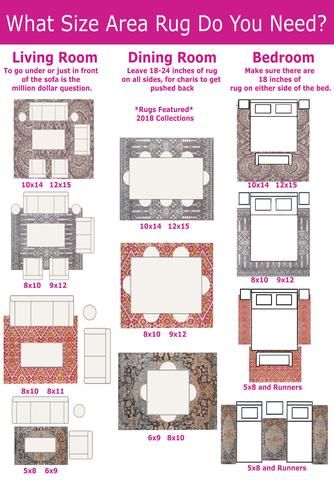

Small Rooms
In small rooms, a large rug could be overwhelming, but a too-small rug might get lost. The key is to find the right balance. A 4' x 6' or 3' x 5' rug can add softness and texture to your small space without making it feel cluttered.
Consider using a rug to delineate different zones in a small room, such as a seating area or a workspace. For instance, you could place a rug under your desk or coffee table to make these areas feel more connected and separate from the rest of the room.
Rug Sizes for Different Furniture Layouts
Besides room size, your furniture layout should also influence your rug choice. Here are some tips for different furniture arrangements:
Floating Furniture
In a 'floating' furniture layout, where furniture is not up against the walls, a larger rug can help to create a cohesive look. The goal is to have all legs of the main furniture pieces (like a sofa, chairs, and coffee table) on the rug, with about 12-18 inches of rug extending out from under the furniture on each side. This creates a grounded, harmonious space.
For example, in a living room with two sofas facing each other, a rug the size of 8' x 10' or larger could work well, depending on the room's dimensions. This would ensure that the rug is large enough to anchor the space while allowing for enough exposed floor around it.
Furniture Against the Wall
If your furniture is placed against the walls, a smaller rug can still make a significant impact. For instance, in a long, narrow room, a runner rug can add warmth and linear interest. In this case, it's less about the rug size and more about how it enhances the room's aesthetic and functionality.
Consider using a smaller rug, like a 2' x 9' or 3' x 8' runner, to define a specific zone within the room, such as a conversation area or a hallway. This can help to break up the space and make it feel more inviting.
In conclusion, choosing the right John Whitaker rug size is aсіяute balancing act between room dimensions, furniture layout, and personal style. But with our comprehensive guide, you're now armed with the knowledge you need to make an informed decision. So, go ahead, explore our collection, and find the perfect rug that brings your space to life. Happy shopping!
Related Articles

Average Sink Cabinet Sizes: Your Complete Kitchen Guide
When designing or remodeling your kitchen, one crucial aspect you shouldn't overlook is the cabinet space, particularly around the sink. The average kitchen...

Kitchen Extractor Hood Duct Size: The Ultimate Guide
Crafting the perfect kitchen often involves paying close attention to the details, including the right kitchen extractor hood duct size . This seemingly minor...

Perfect Faucet Fix: Sink Faucet Nut Size Guide
Ever wondered about the variety of sizes of nuts that fit onto your sink faucet? Understanding the different sizes can help you during repairs or when choosing...

Size of Cabinet Pulls for 36 Inch Drawers: A Guide
When it comes to cabinet hardware, the size of your drawer pulls can significantly impact both the functionality and aesthetics of your space. For 36-inch...

The Perfect Metres: Guide to Ideal Bathroom Sizes in CM
Determining the ideal bathroom size primarily depends on your specific needs, home layout, and available space. In centimetres, the dimensions can vary...

What Size Cabinet for 27 Inch Wall Oven: A Guide
When planning a kitchen renovation or aesthetic change, one of the key decisions to make is choosing the right size for your appliances. This includes finding...