Understanding Contemporary Living Room: Definition & Essentials
The contemporary living room, a symbol of modern lifestyle, has evolved significantly from its traditional counterparts. It's no longer just a space for relaxation; it's a dynamic hub that reinvents itself to cater to our ever-changing needs. But what exactly defines a contemporary living room? Let's delve into this multifaceted concept.
At its core, a contemporary living room is characterized by a blend of minimalism and versatility. It's a balanced combination of function and aesthetics, creating a space that is not only enjoyable to inhabit but also practical for daily life. It reflects the contemporary ethos of streamlined design, embracing simplicity and clean lines.
Design Elements
The visual language of contemporary design is marked by simplicity, functionality, and a balance between form and material. It favors a monochromatic or neutral color palette, with occasional pops of bold color or metallics to create contrast and interest.


Strong geometric shapes and linear patterns are recurring motifs, often seen in furniture, lighting, or even room layouts. Open floor plans, modular furniture, and lots of natural light are hallmarks of contemporary living spaces.
Color & Light
Neutral colors - think whites, grays, beiges, and blacks - are the canvas upon which the contemporary living room is painted. This allows for striking contrast with vibrant accents, while also ensuring a calming, peaceful atmosphere.
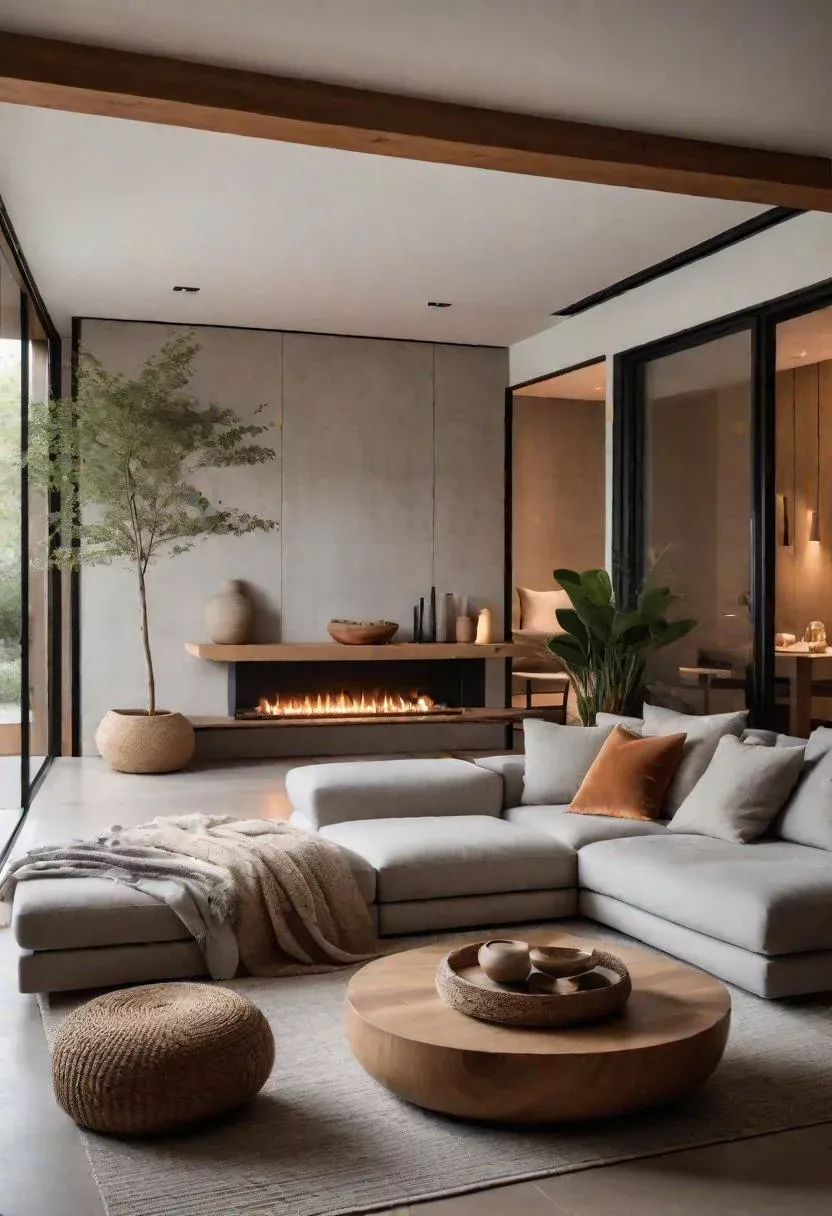


Light plays a pivotal role, with contemporary designs maximizing natural light through large windows, while task and accent lighting serve to define spaces and highlight key features.
Furniture & Layout
Furniture in contemporary living rooms is often sleek, with clean lines and minimal ornamentation. Sectionals, modular sofas, and multifunctional pieces are favored, reflecting the changing needs of modern families. A mix of mid-century modern and contemporary styles is not uncommon.
The room layout is typically open and uncluttered, encouraging fluid movement and exploration. The use of zoning - with different areas for relaxation, work, or dining - is common, adding to the room's versatility.


Materials & Textures
The contemporary aesthetic values natural, honest materials like wood, metal, glass, and stone. These materials are used not just for their functional properties but also for their tactile appeal and visual interest. Textures abound, from smooth polished metal to chunky knit textiles.
Sustainability is increasingly influential in material choices. Recycled materials, responsibly sourced woods, and eco-friendly fabrics are becoming more common, reflecting our growing environmental awareness.
Textiles & Finishes
Textiles in contemporary living rooms are often neutral, with subtle patterns and textures. They can add warmth and softness to the room's hard surfaces, while also providing opportunities for color and pattern.
Finishes are typically matte or satin, rather than glossy, to maintain a certain understated elegance. The preference is for a harmonious, balanced look rather than something flashy or over-the-top.
Art & Decor
Art and decor in contemporary living rooms often take the form of statement pieces. A single, striking artwork can become the room's focal point, complemented by a few well-chosen decorative items.
Geometric shapes, abstract designs, and minimalist sculptures are popular choices. Again, the goal is to create a streamlined, cohesive look rather than a cluttered, eclectic one.
The contemporary living room is more than just a space; it's an expression of our modern lives. It's a testament to our desire for functionality, versatility, and beauty. It's a space that doesn't just serve our needs but also inspires us to dream, create, and live fully.
Related Articles

Contemporary Living: A Comprehensive Definition
Contemporary living, a phrase often tossed around in architecture and design circles, has become more than just a passing trend. It's a way of life, an...

"10 Essential Living Room Essentials"
The living room, often the epicenter of a home, is where we unwind, entertain, and create lasting memories. Transforming this space into a reflection of your...

Compare Contemporary, Classic & Chic Curtain Styles for Your Living Room
When it comes to transforming the look and feel of your living room, the choices you make for your window treatments can have a significant impact. Curtains...

Modern Contemporary Wall Sconces: Illuminate Your Living Room
Elevate your living space with contemporary wall sconces that not only illuminate but also serve as stylish accent pieces. These sleek, modern fixtures can...

Contemporary Main Hall Simple False Ceiling Designs for Living Room
Accentuate your living room's modernity and elegance with contemporary false ceiling designs. These innovative ceiling designs aren't just about aesthetics...

Corner Bar Table: Living Room Essentials
Transforming your living room into a perfect blend of functionality and style? A corner bar table could be just the thing you're looking for. These versatile...